

Court-Ordered Driving and Theft Education Programs That Support Compliance and Safer Decisions
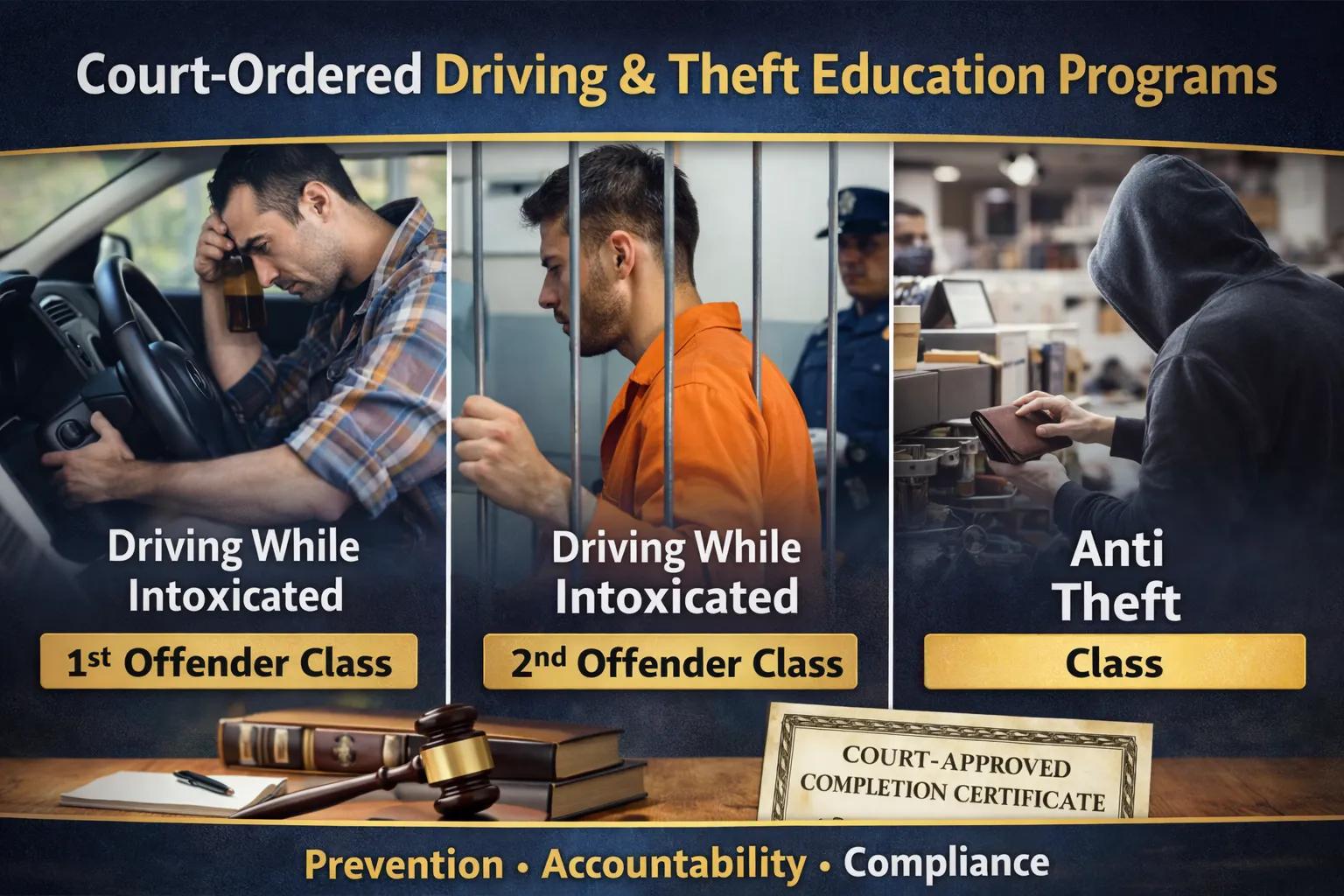
Education Programs That Support Compliance and Safer Decisions
Court-ordered education programs play a critical role in helping individuals meet legal obligations while improving awareness, accountability, and long-term decision-making. For offenses involving impaired driving or theft-related violations, courts increasingly rely on structured educational courses to reduce repeat offenses and promote responsible behavior.
Programs available through Court Order Courses are designed to meet court standards while offering flexible, online learning options that allow participants to complete requirements efficiently and privately.
Why Courts Assign Education for Driving and Theft Offenses
Judicial systems recognize that education can be more effective than punishment alone for certain non-violent offenses. Rather than focusing solely on penalties, courts use education to address underlying behaviors, improve judgment, and reduce the likelihood of future violations.
Court-ordered programs aim to:
Increase awareness of legal and safety consequences
Encourage personal accountability
Reduce recidivism rates
Provide verifiable proof of compliance
By completing a court-approved course, participants not only fulfill legal requirements but also gain practical knowledge that supports safer, more responsible choices moving forward.
First-Time DWI Education: Building Awareness Before Patterns Form
For individuals charged with a first impaired driving offense, courts often prioritize education over severe punishment. The goal is to prevent repeat behavior by addressing risk factors, impaired judgment, and decision-making habits early.
The Driving While Intoxicated 1st Offender Class focuses on understanding alcohol-related impairment, legal consequences, and the impact of intoxicated driving on personal safety and public welfare. Participants learn how substance use affects reaction time, judgment, and long-term legal records.
This course is commonly assigned to first-time offenders to reduce the risk of escalation into repeat violations and more serious legal consequences.
Second-Time DWI Programs: Accountability and Behavioral Correction
Repeat impaired driving offenses require a more structured educational approach focused on accountability and behavioral change. Courts often mandate extended education for individuals facing second DWI violations to address patterns of risky behavior.
The Driving While Intoxicated 2nd Offender Class emphasizes recognizing high-risk situations, understanding repeat offense penalties, and developing strategies to avoid future impaired driving incidents. This course supports long-term behavioral change by combining legal awareness with practical prevention techniques.
By assigning second-offender education, courts aim to interrupt dangerous cycles before they lead to more severe outcomes.
Preventing Theft Through Structured Awareness Education
Theft-related offenses often stem from impulse control issues, financial pressure, or poor judgment. Courts assign educational programs to help individuals understand the broader impact of theft and reduce the likelihood of future violations.
The Anti Theft Class focuses on the legal, financial, and social consequences of theft. Participants explore how theft affects victims, businesses, communities, and personal records. The course also promotes ethical decision-making and accountability.
For first-time or non-violent offenders, theft education is often preferred over harsher penalties because it addresses behavior directly and supports rehabilitation.
How Online Court-Ordered Courses Improve Access and Completion
Online court-ordered education has transformed how individuals fulfill legal requirements. Instead of attending fixed-location classes, participants can now complete coursework from home while meeting court expectations.
Programs offered through Court Order Courses are designed to:
Be self-paced and accessible 24/7
Meet court and probation standards
Provide structured, engaging educational content
Deliver verifiable certificates of completion
This flexibility reduces missed deadlines, scheduling conflicts, and transportation barriers, improving completion rates and compliance reliability.
Certificates and Court Verification: Why Proof Matters
Once coursework is completed, proper documentation becomes essential. Courts require clear proof that participants fulfilled all educational obligations within assigned deadlines.
Completion certificates typically include:
Participant identification
Course title and duration
Date of completion
Court-recognized formatting
Submitting accurate documentation prevents delays, additional fines, or extended probation related to incomplete compliance.
Education as a Long-Term Safety Strategy
Court-ordered education is not only about compliance—it is a preventive strategy that protects individuals and communities. By addressing impaired driving risks and theft-related behaviors early, these programs reduce accidents, financial harm, and future legal involvement.
Participants often gain:
Improved risk awareness
Better impulse control
Stronger decision-making skills
Clear understanding of legal consequences
This rehabilitative approach aligns with judicial goals of prevention, public safety, and long-term behavioral improvement.
Frequently Asked Questions (FAQs)
What are court-ordered driving and theft education programs?
They are educational courses mandated by a judge or court to fulfill legal requirements related to impaired driving or theft-related offenses.
Are online court-ordered courses accepted by courts?
Yes. When taken through recognized providers like Court Order Courses, these programs are designed to meet court standards and are widely accepted when completed as instructed.
Who must take a DWI first offender class?
Individuals charged with a first impaired driving offense may be required to complete a DWI education course as part of sentencing or probation conditions.
What is the purpose of a second offender DWI class?
It addresses repeat impaired driving behavior by emphasizing accountability, prevention strategies, and the serious consequences of repeated violations.
Who is assigned an anti-theft class?
Individuals charged with theft or related offenses—often first-time or non-violent offenders—may be required to complete a theft awareness course.
Will I receive a certificate after completing my course?
Yes. Upon completion, participants receive an official certificate that can be submitted to the court, probation officer, or legal representative as proof of compliance.